Japan was a dream long before I was old enough to fly anywhere on my own.
It did not come from travel writing. It came from manga, from Japanese action series, from films. Japan existed in my head before I knew what I actually wanted to see there.
I went for the first time in 2019. Part of that trip I stayed in Nerima, near Tokyo, with a friend’s mother. After that, the classic route: Tokyo, Kyoto, Osaka. It was wonderful. But it was exactly what it was. I visited Japan.
In 2025 I wanted something else. I wanted to get off the standard route. So I found work.
When I land in Tokyo I always notice the same thing. A faint chlorine-like smell in the city. I still do not know where it comes from and I have stopped asking. For me that smell simply means I am back in Japan.
Then the rest of it. FamilyMart, Lawson, 7-Eleven, on every second corner. It takes about twenty minutes to feel oriented again.
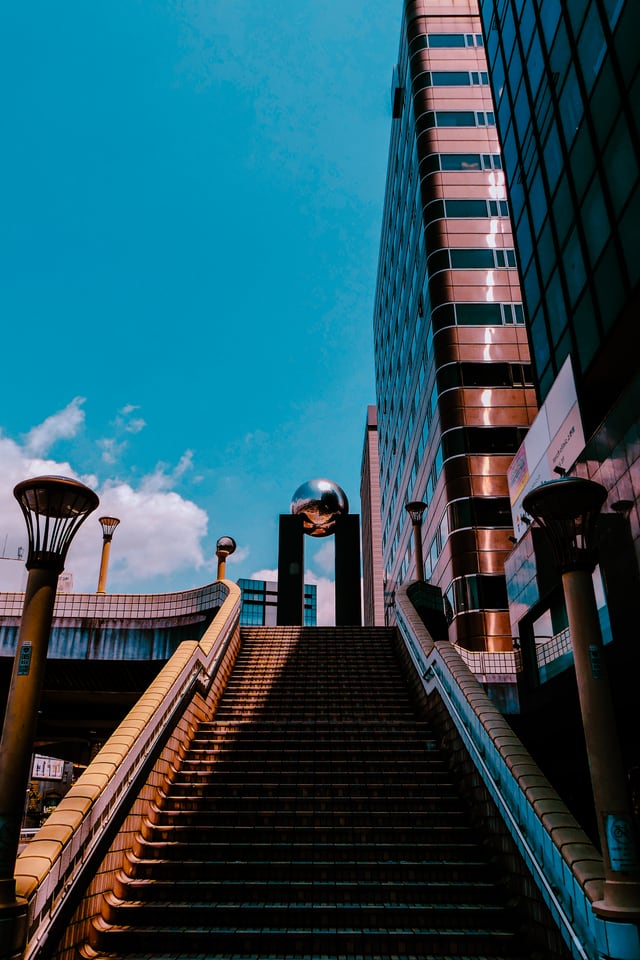
What I noticed this time, already while changing trains, is that tourism has changed. One group was drunk enough that nobody in it was embarrassed any more, which left the job to everybody else. Loud, careless, in the middle of a country where consideration matters quite a lot.
That genuinely annoyed me. Not because of where anyone was from — that has nothing to do with it. But because I kept seeing the consequence afterwards in Tokyo: in some places the patience with visitors has visibly worn thin. I understand it.
And yes. I am a gaijin with a camera. I am not standing outside any of this. I just try to behave.
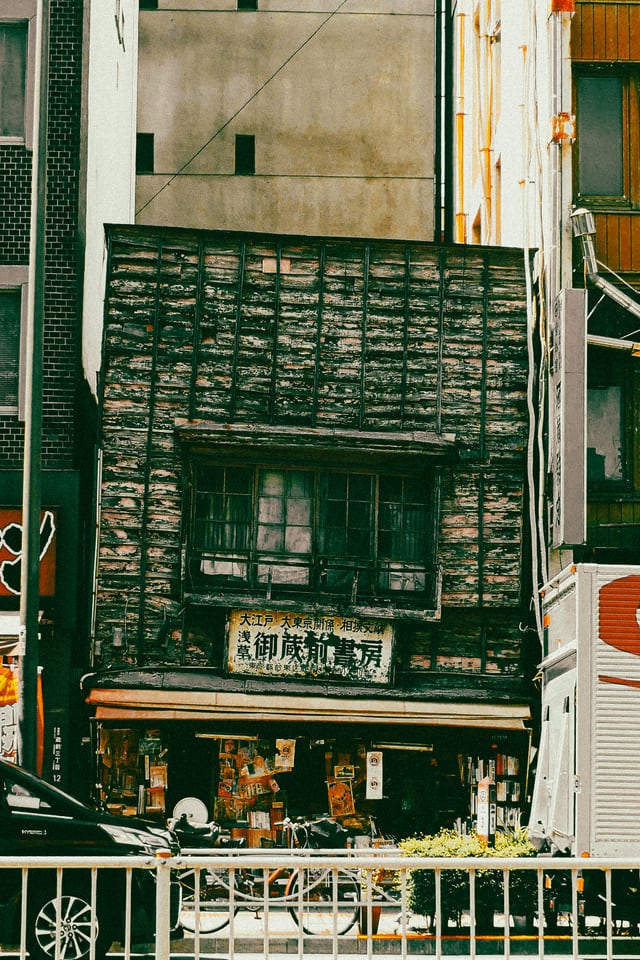
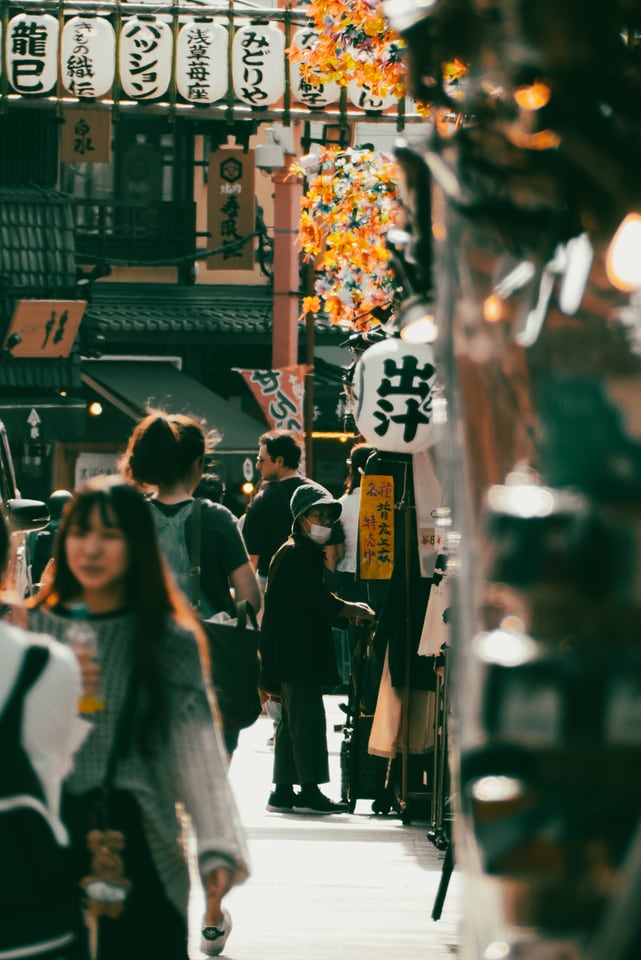
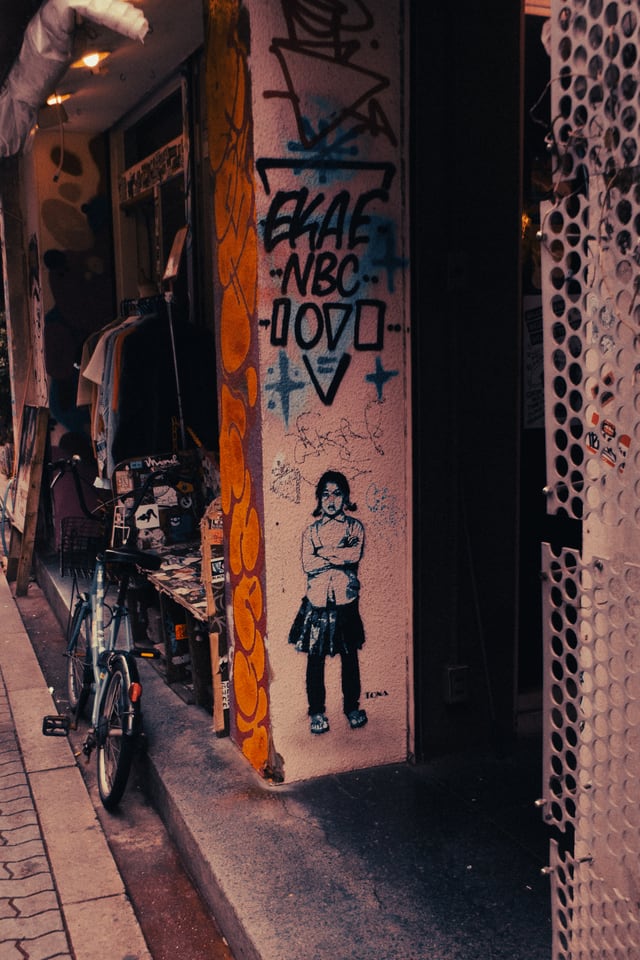
I stayed about a day. Asakusa, mainly to photograph. Not the temple — the streets in front of it, the people, whatever is left of another century between two office towers. Then I moved on.
Six hours north
Long-distance bus to Niigata, roughly six hours.
I really like travelling by bus in Japan, and it is for a reason that sounds ridiculous: even the stops are good. The service areas often sit in the landscape, the food is decent, the toilets are clean, and the smoking areas are properly separated so nobody has to join in.
Japan somehow turns a motorway break into a small event. I have no idea how. I just enjoyed it.
One night in Niigata. That was all it was, and all it needed to be.
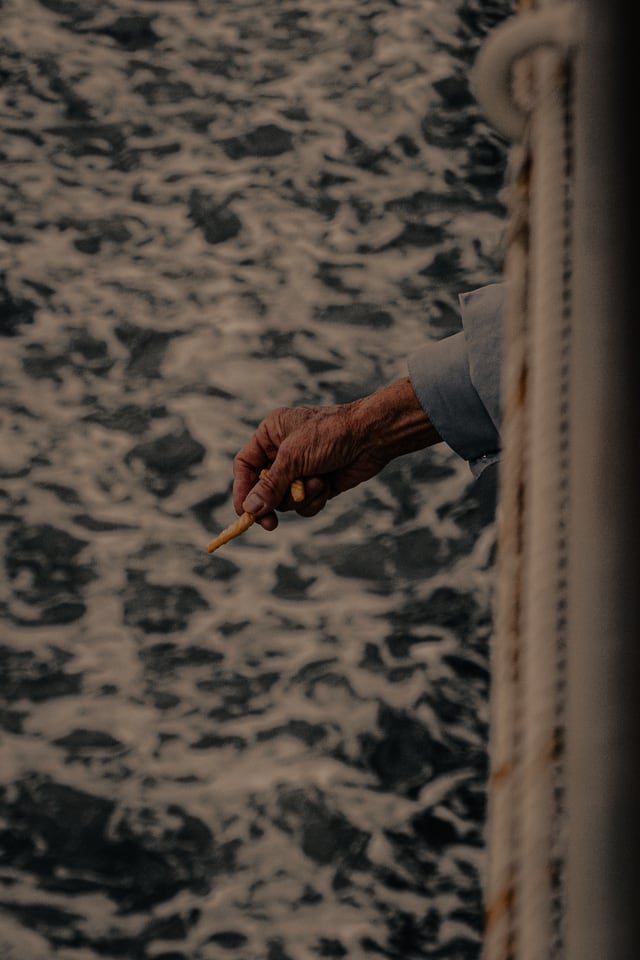
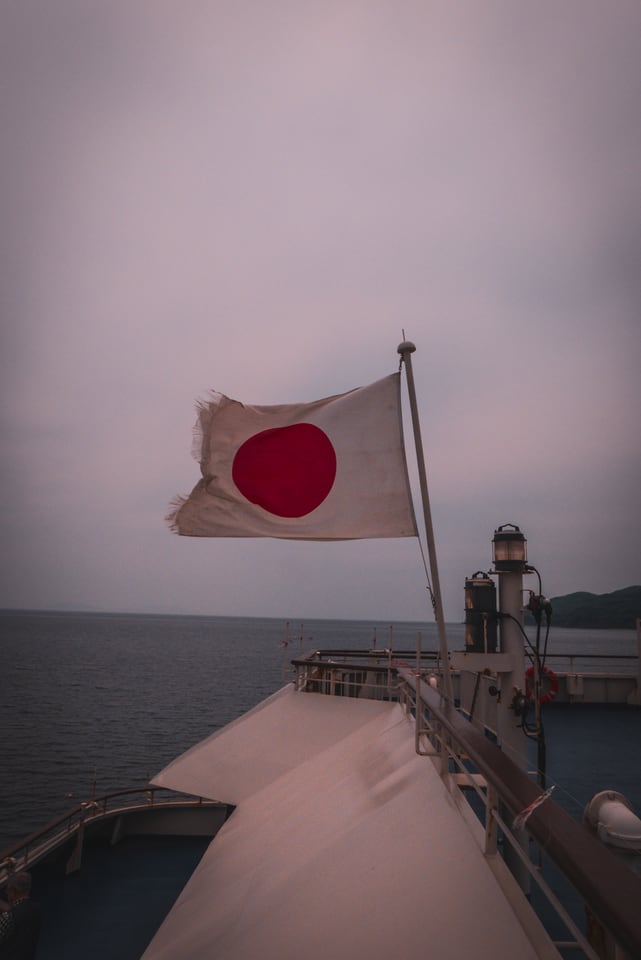
Then the ferry. Gulls over the stern, the water behind the ship a blue I had not seen before, and eventually an island considerably bigger than the one in my head.
Where I lived
I stayed about five weeks.
I lived at HANAYA, a guesthouse in a former ryokan right by the harbour in Ogi. Tatami, a futon, a low table, the toilet out in the corridor. Nothing more. After three days it stopped being a room and became where I lived.
The house is run by Kotaro and Sami. Their daughter Hanako belongs to it just as obviously. A wonderful family — and by that I do not mean friendly to guests. I mean that after five weeks I knew what their day looked like, and they knew what mine looked like.
I did two jobs at once: reception and guests, and the tarai-bune.
The boats
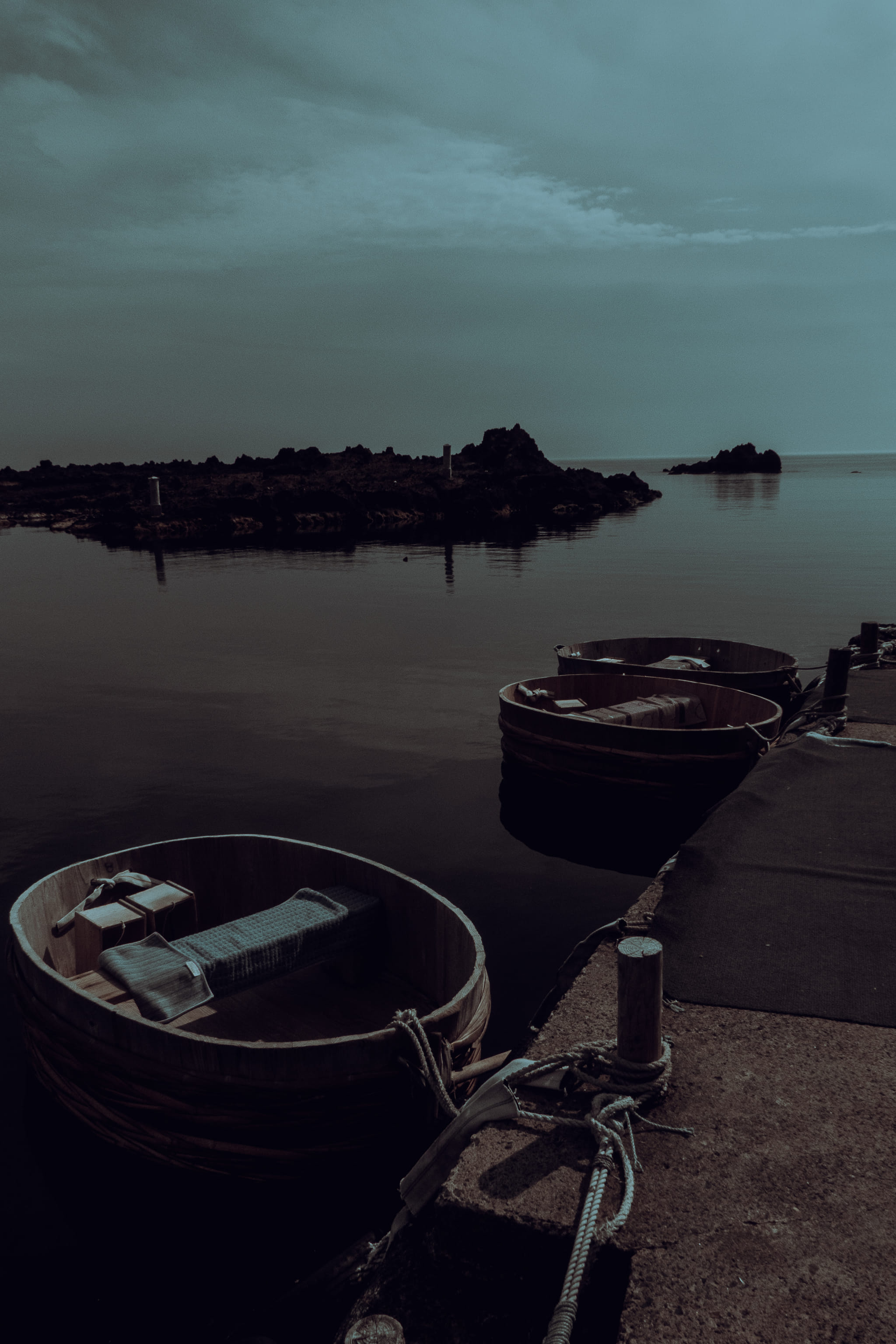
Tarai-bune. On Sado people also call them hangiri, because they look like barrels cut in half. That is more or less what they are: round boats of cedar and bamboo, once used in the bays of the peninsula to fish for seaweed and shellfish. They are not cute. They are craft.
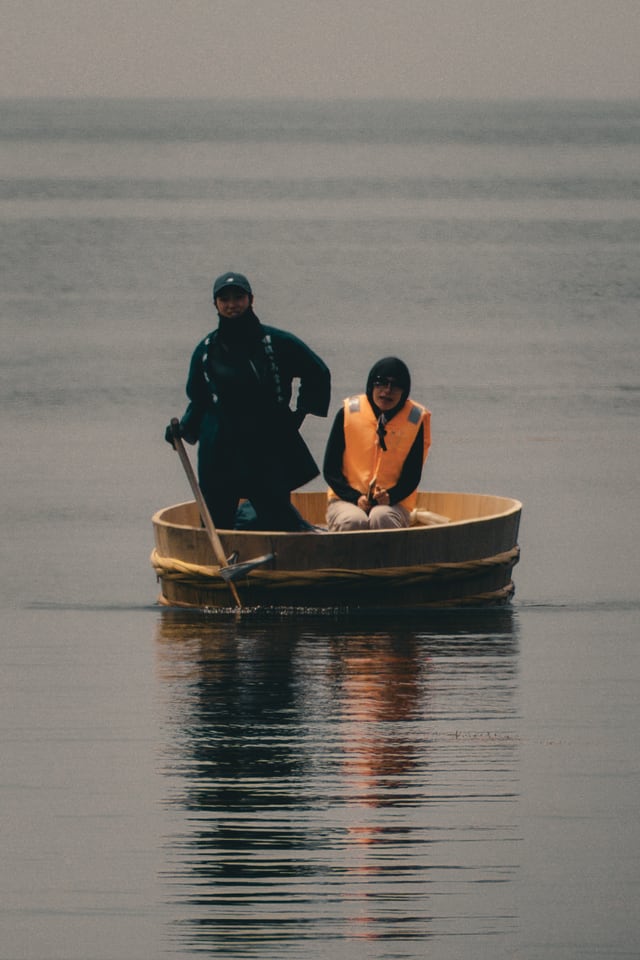
They belong to Shukunegi, an old shipbuilding village at the southern tip of the island. Narrow lanes, dark timber, houses that look as though somebody wedged them between the rocks so the wind could not take them.
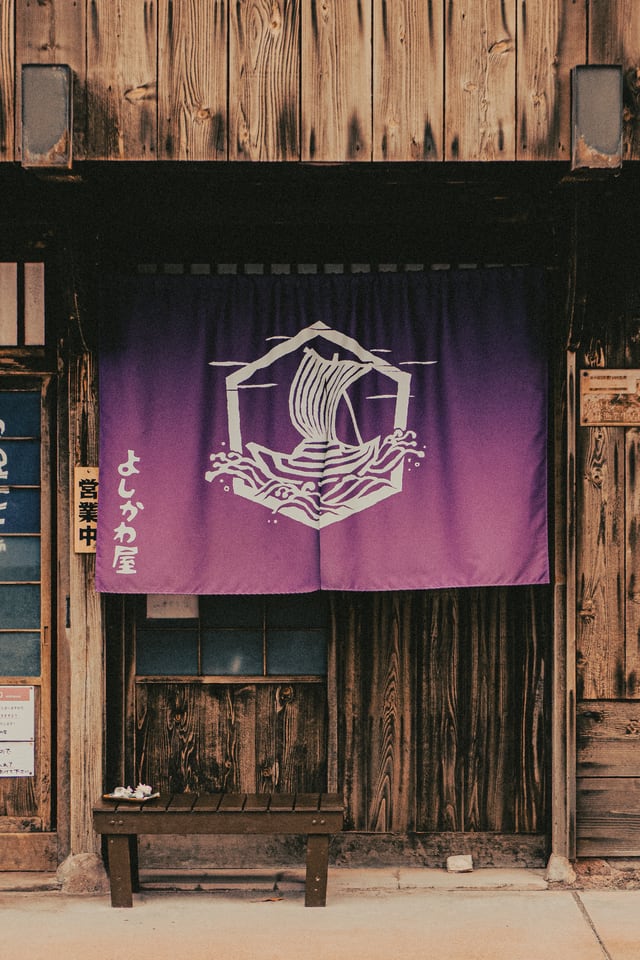
My boss there was Keiji-san. The tarai-bune operation is his, and he is also one of the few people who still builds these boats by hand.
The day went like this. Keiji-san picked me up in the morning. We drove down, set up the stand, got everything ready, brought the boats to the landing — and then we waited. When guests came, they got a life jacket, a short explanation, and out we went.
That was the work. Not more, not less. I liked it enormously.
Most of the day, incidentally, was waiting. Waiting for guests, waiting for better weather, waiting for the sun to sit where it was worth going out. You end up standing next to the same person for a very long time. It is a badly underrated way of getting to know someone.
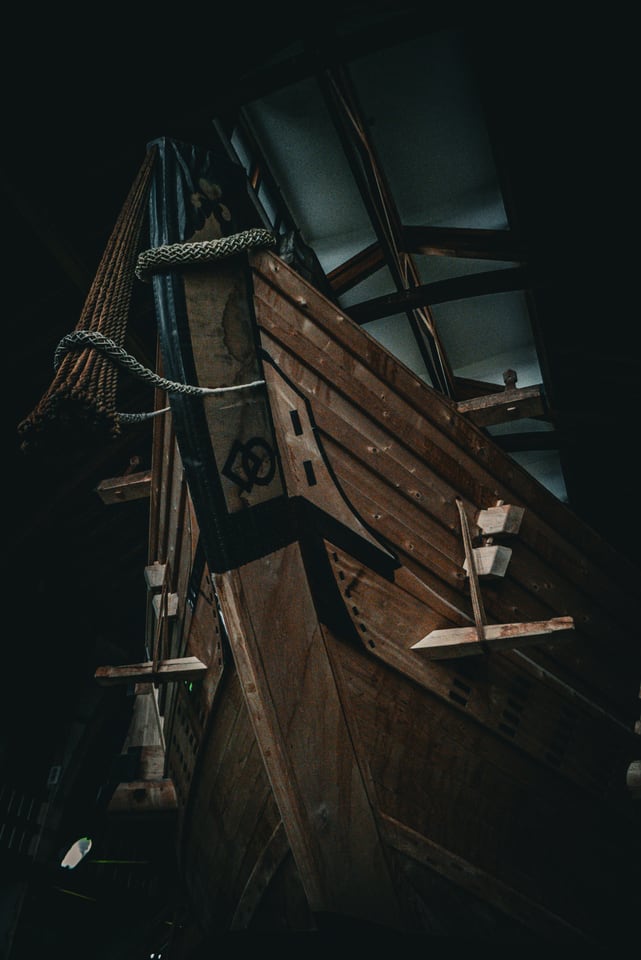
At the start I had to learn how to steer one of these things at all. That took a few days. After that they apparently trusted me enough to put tourists in the boat with me.
There were three routes I could run, and a fourth, bigger one that was simply too much for me. On that I was honest with myself.
My Japanese was limited. My standard tool for enthusiasm was sugoi. For everything else there was the translator app, and I see nothing wrong with that. It worked. You understand each other faster than you would think when you carry the same boats into the water every morning.
That work went into the body after a while. Shoulders, back, hands. So after work I was at the onsen in Ogi very often. In, hot water, out again eventually. The end of a working day did not have to be more complicated than that.
Usually the supermarket afterwards. And at some point I even enjoyed that, which probably says a fair amount about how ordinary the place had become to me.
Keiji-san had a German Shepherd, Asti. The dog was attached to him the way dogs are when they genuinely belong to someone. Asti is no longer alive. I had already left the island by then, and it still bothers me that I could not be there.
Some days the island is friendly
The water around Sado is clear enough to count the stones on the bottom. I looked into it every day for weeks and it did not get boring.
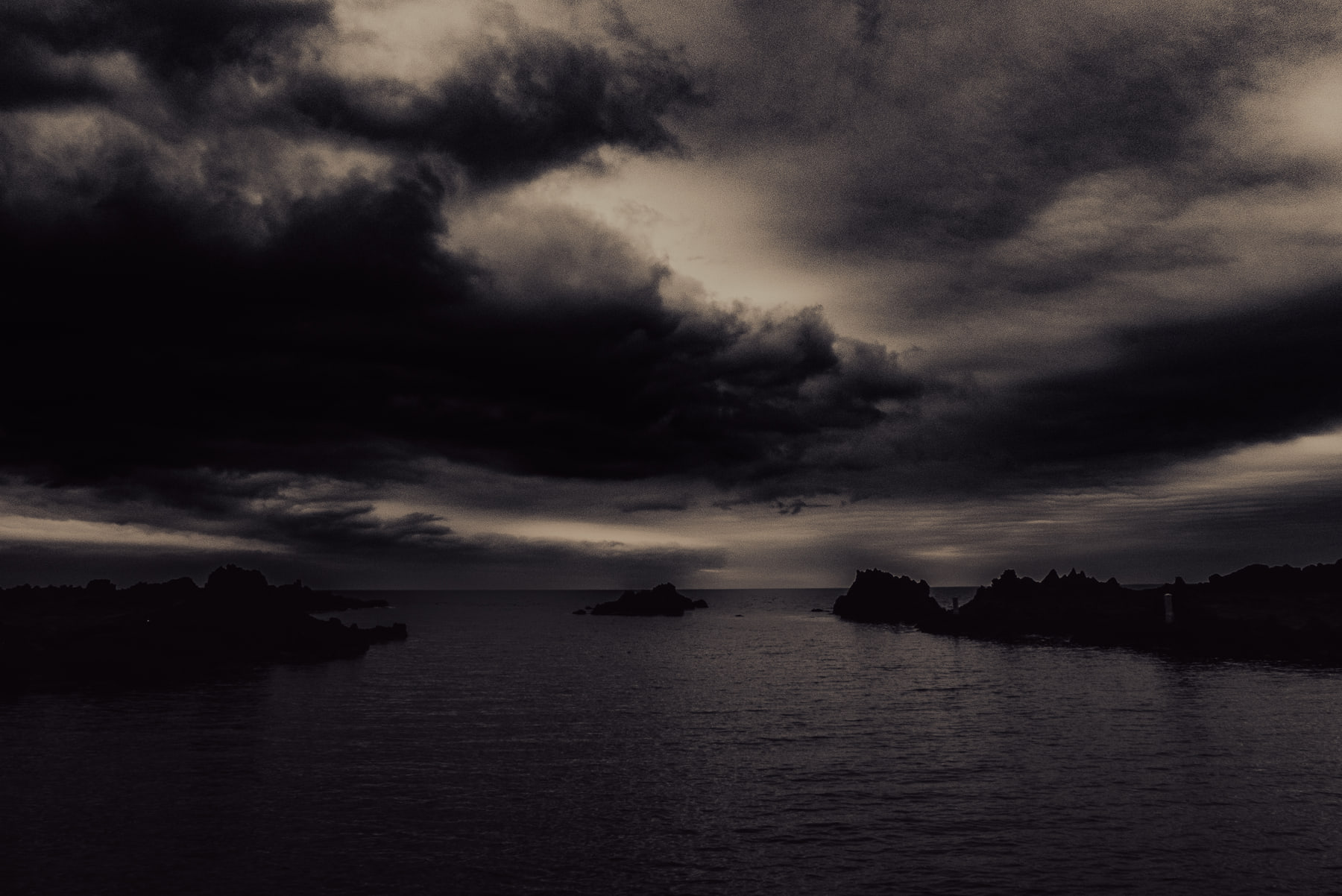
But the island has moods. On some days it is friendly. On other days it is not friendly at all. When the rain and the wind arrive, the same bay turns hard and exposed and unwelcoming. You understand very quickly that the people here have to negotiate with the sea rather than sit in front of it.
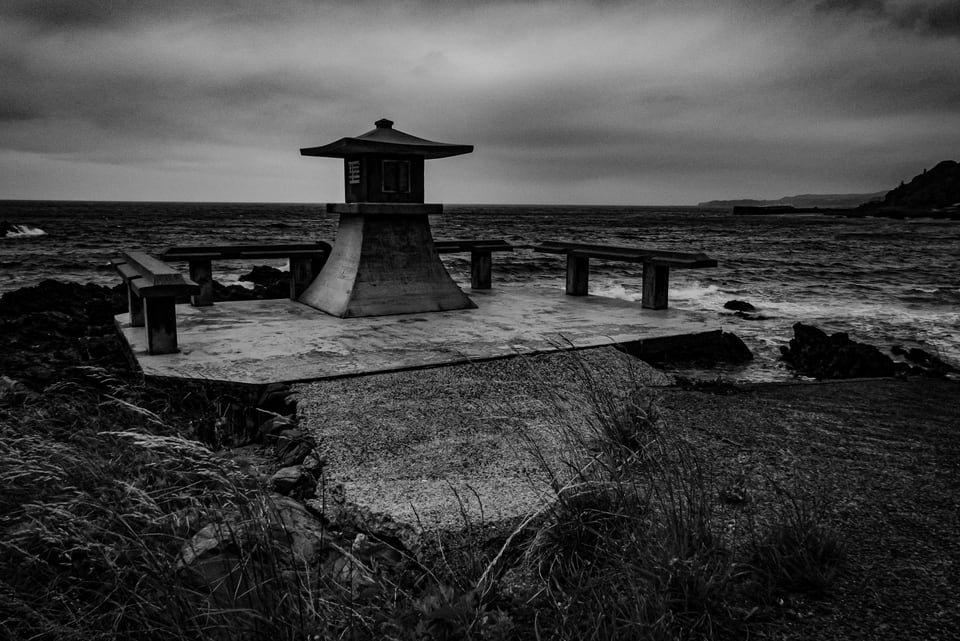
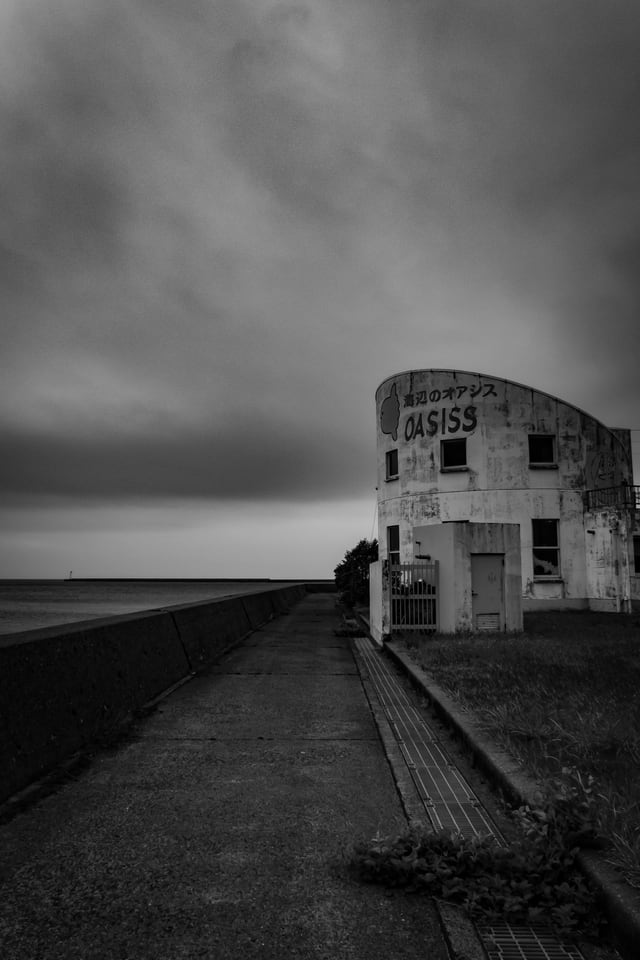
Kotaro gave me a racing bike, which was close to the best present of the whole trip. On days off I rode it across the island. To photograph, to eat, to get somewhere — and quite often simply because I felt like moving.
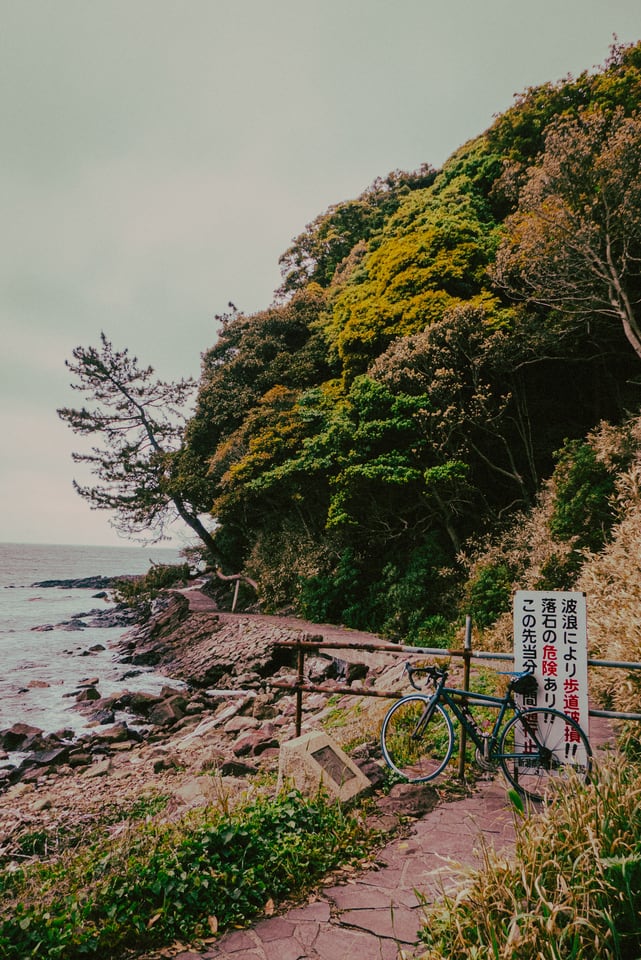
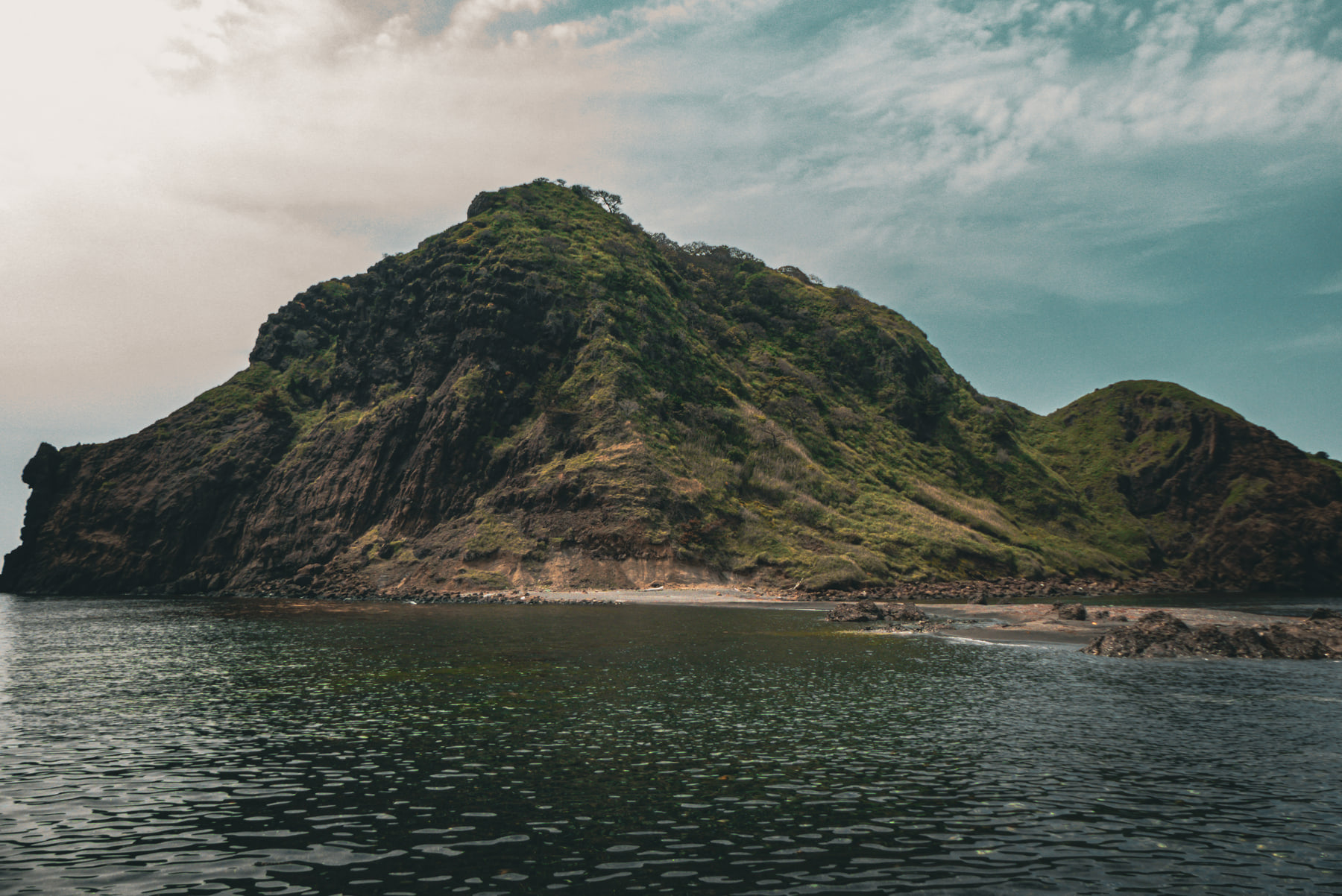
I rode out to the lighthouse and around that part of the island more times than I can count. And the island itself kept doing things I had not expected: green capes running out into the sea, meadows full of orange lilies. I have more photographs from Sado than from most places in my life.
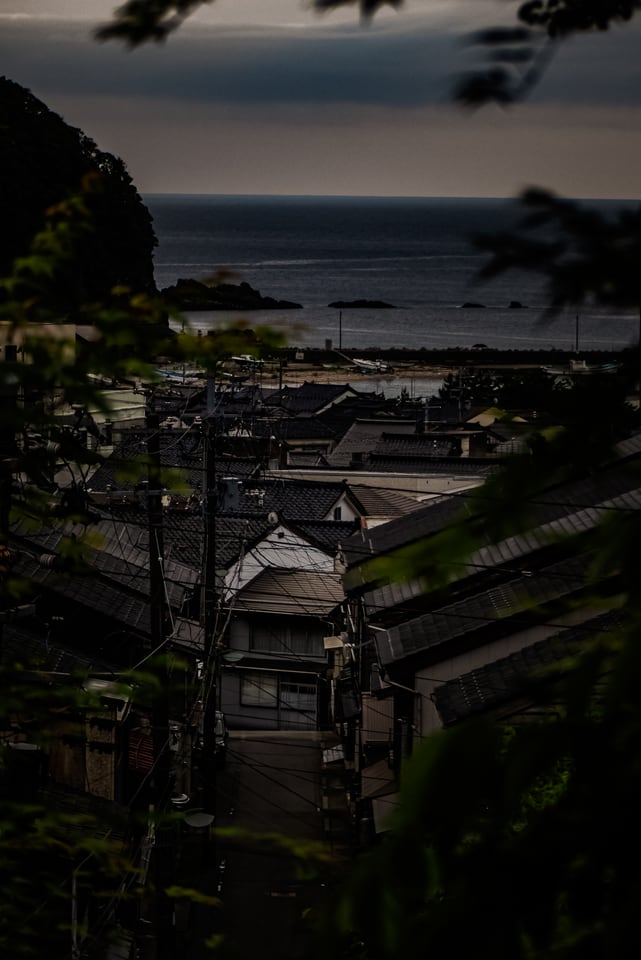
In between, villages where nothing happens after half past six in the evening.
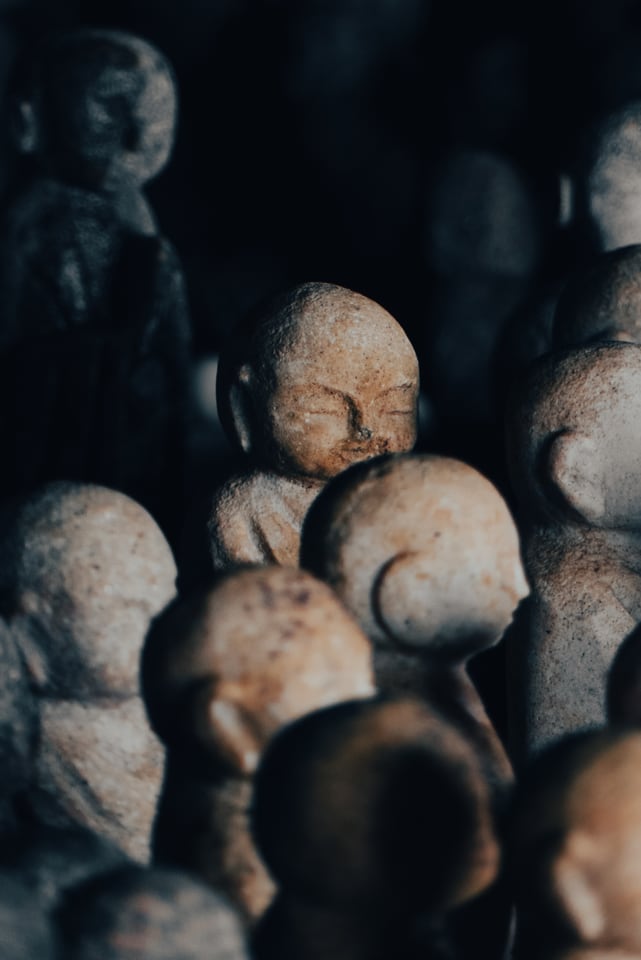
Rows of small stone figures at the roadside that somebody clearly keeps supplying with fresh flowers. And on clear days, far out over the water, the snow on the mountains of the mainland. From this island you can see fairly precisely how far away you are.
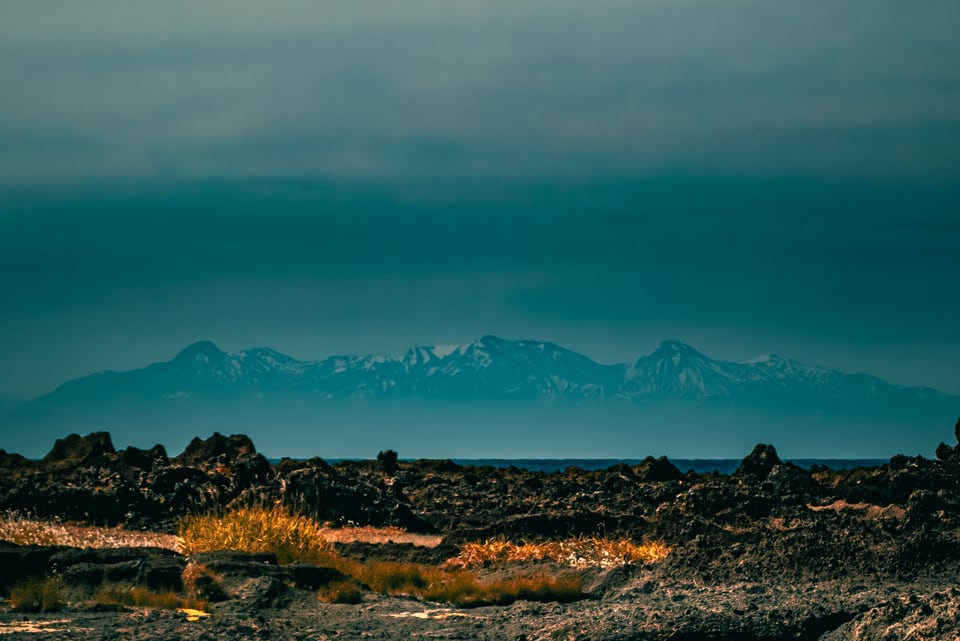
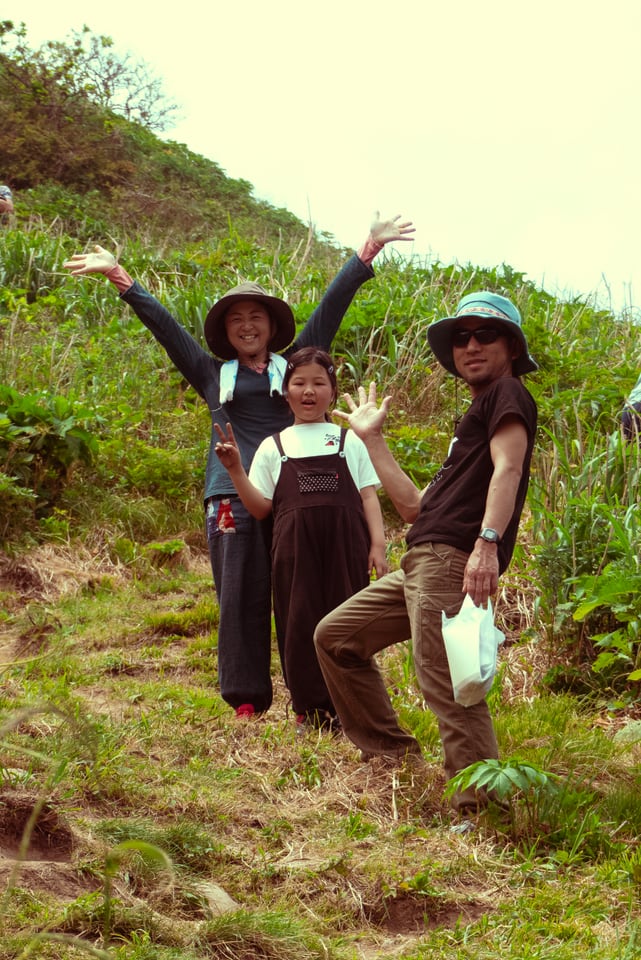
Sometimes I rode alone. Sometimes we all went together.
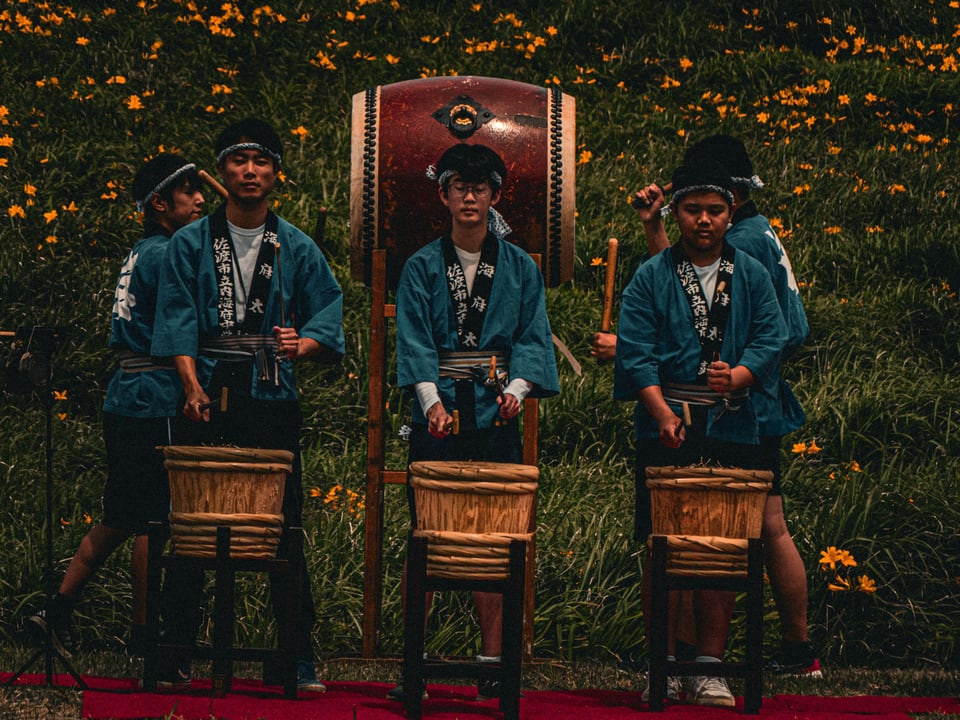
I also got to try taiko. Japanese drumming, in a class, my talent charitably overlooked.
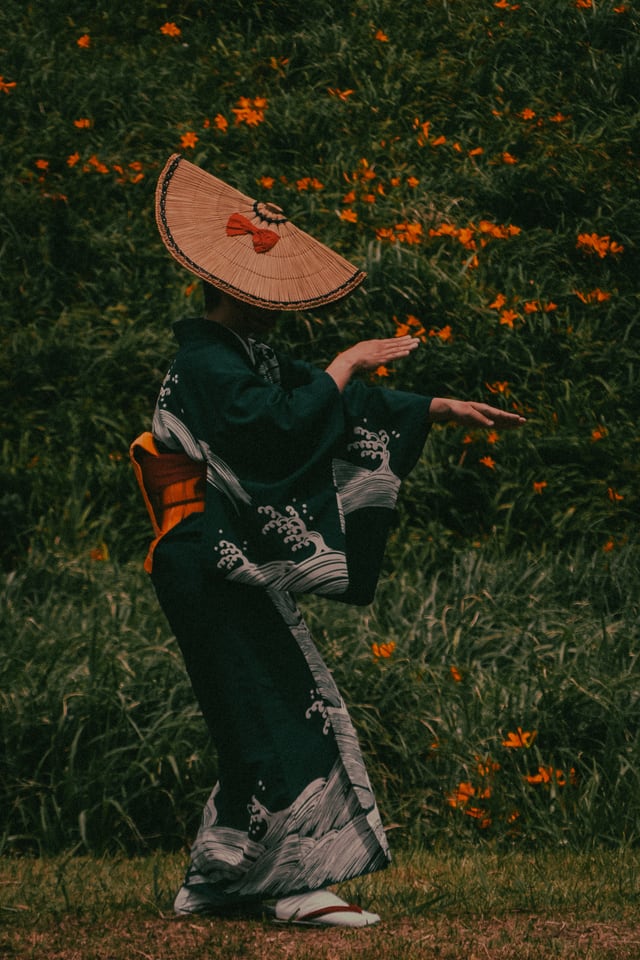
And we went out singing karaoke twice with the hangiri team. It was exactly how you imagine Japanese karaoke. Exactly.
People invited me to eat with them a few times, mostly when I arrived and again before I left. Those evenings mattered to me. It was not the meals that did it, though. It was the mornings, the boats, the waiting, the karaoke — at some point I stopped being the foreigner who works there.
Leaving
In the end I left by ferry, from Ogi.
Kotaro played the flute.Sami waved flags.Hanako drummed.
They played for me before I went aboard.
I cried like a child.
I do not remember the song any more. I remember exactly who played it.
The ferry did not go back to Niigata. It went to Naoetsu, in Jōetsu. The photographs with the red lighthouse are from there, from arriving.
Then I had about six kilometres to walk to the bus stop. With luggage. Exhausting — and at the same time one of the most interesting stretches of the whole trip, because it was not a route at all. Just ordinary Japanese streets, suburbs, a small city at the end of the working day.
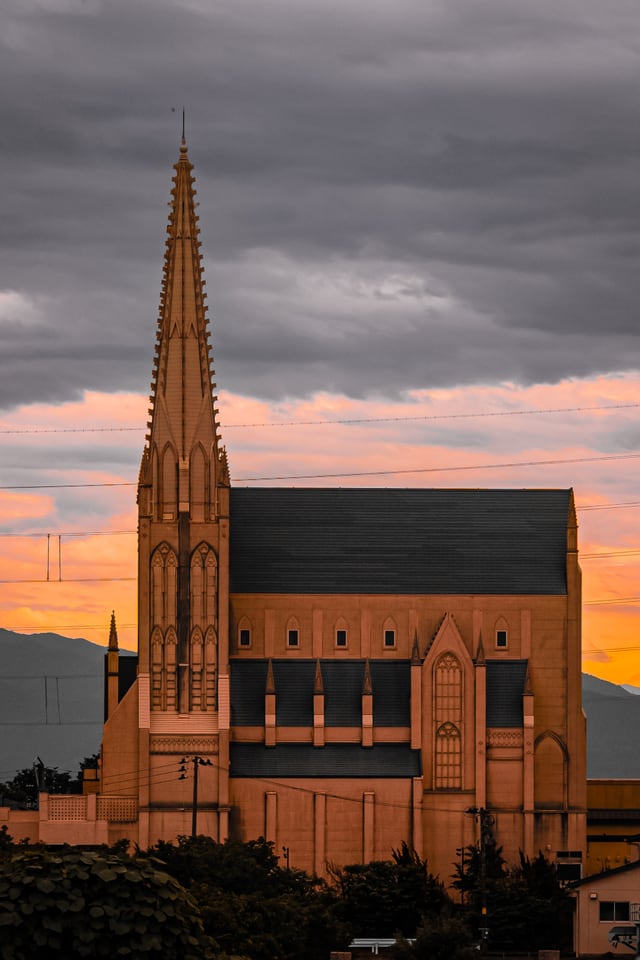
Children came the other way, walking home from school on their own. One of them stopped and asked me roughly who I was and what I was doing here. No shyness, just curiosity. I got the translator out and we talked for a bit.
I am not going to build a theory about Japan out of that. I will only say that compared with a lot of places I have travelled, that matter-of-factness stayed with me.
After that, on to Nagoya. Big city, short stay. I was on my way to the next job.
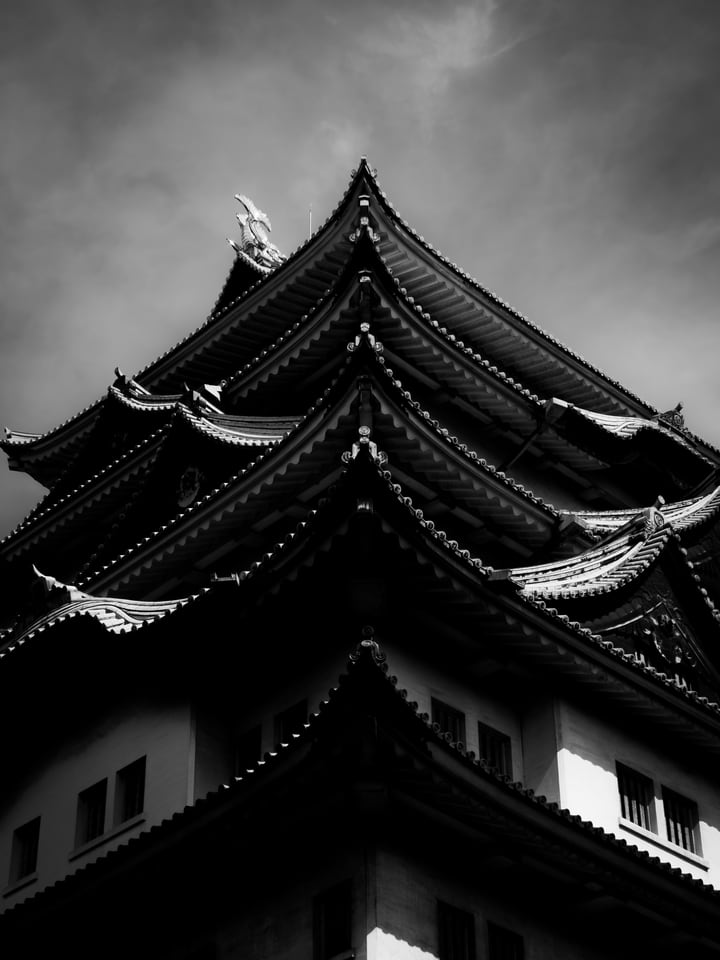
Agui
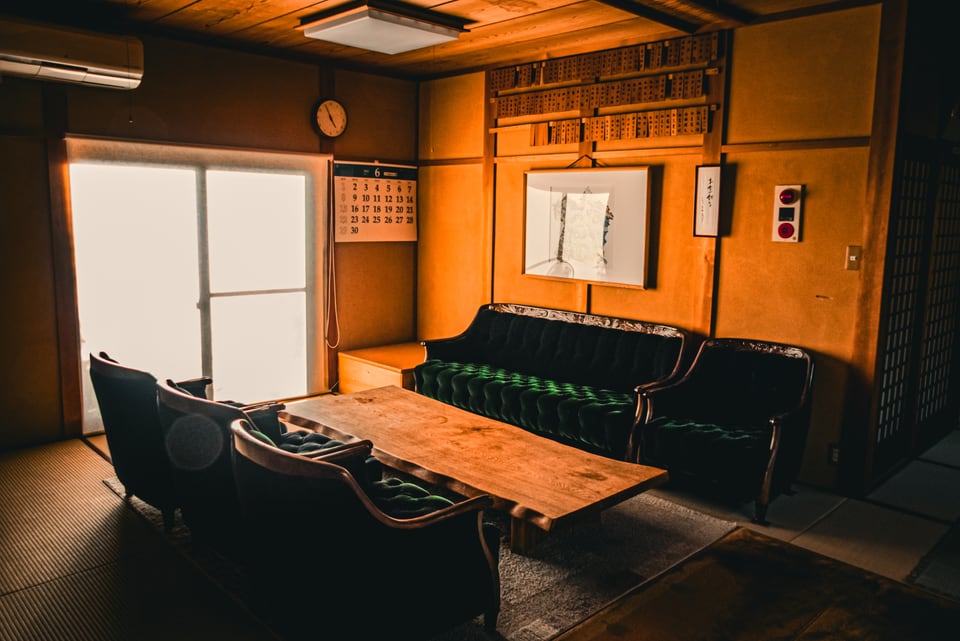
That was in Agui, in Aichi Prefecture, at a Buddhist temple.
The work was maintaining the grounds. Mowing grass, among other things. In heat that felt close to forty degrees.
I stopped earlier than planned. It was physically too much and not what I had imagined. There was no argument and no bad feeling. We parted on good terms, and that mattered to both sides.
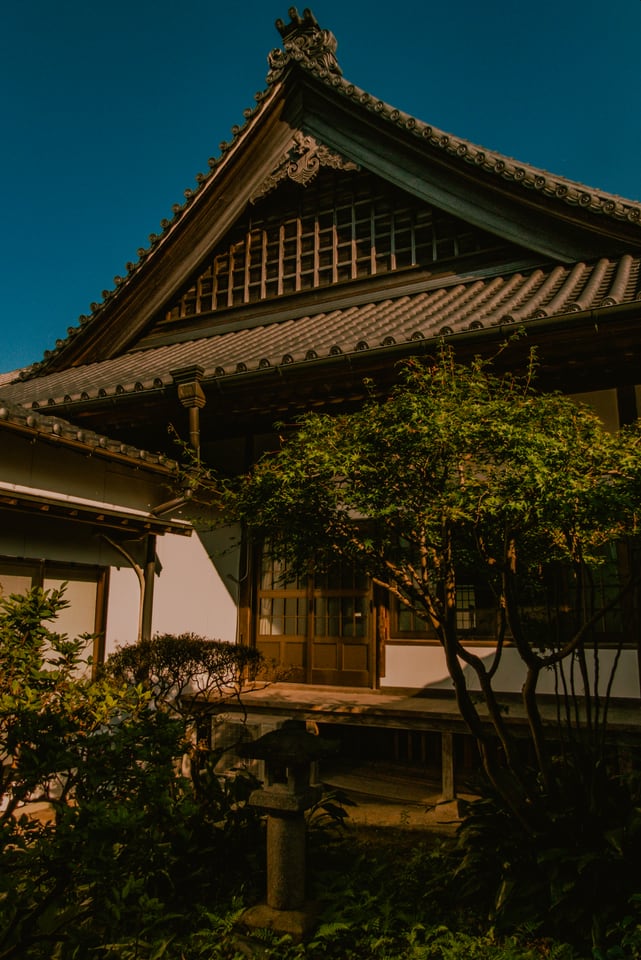
Agui still became one of the most important places of the whole trip, for a completely different reason.
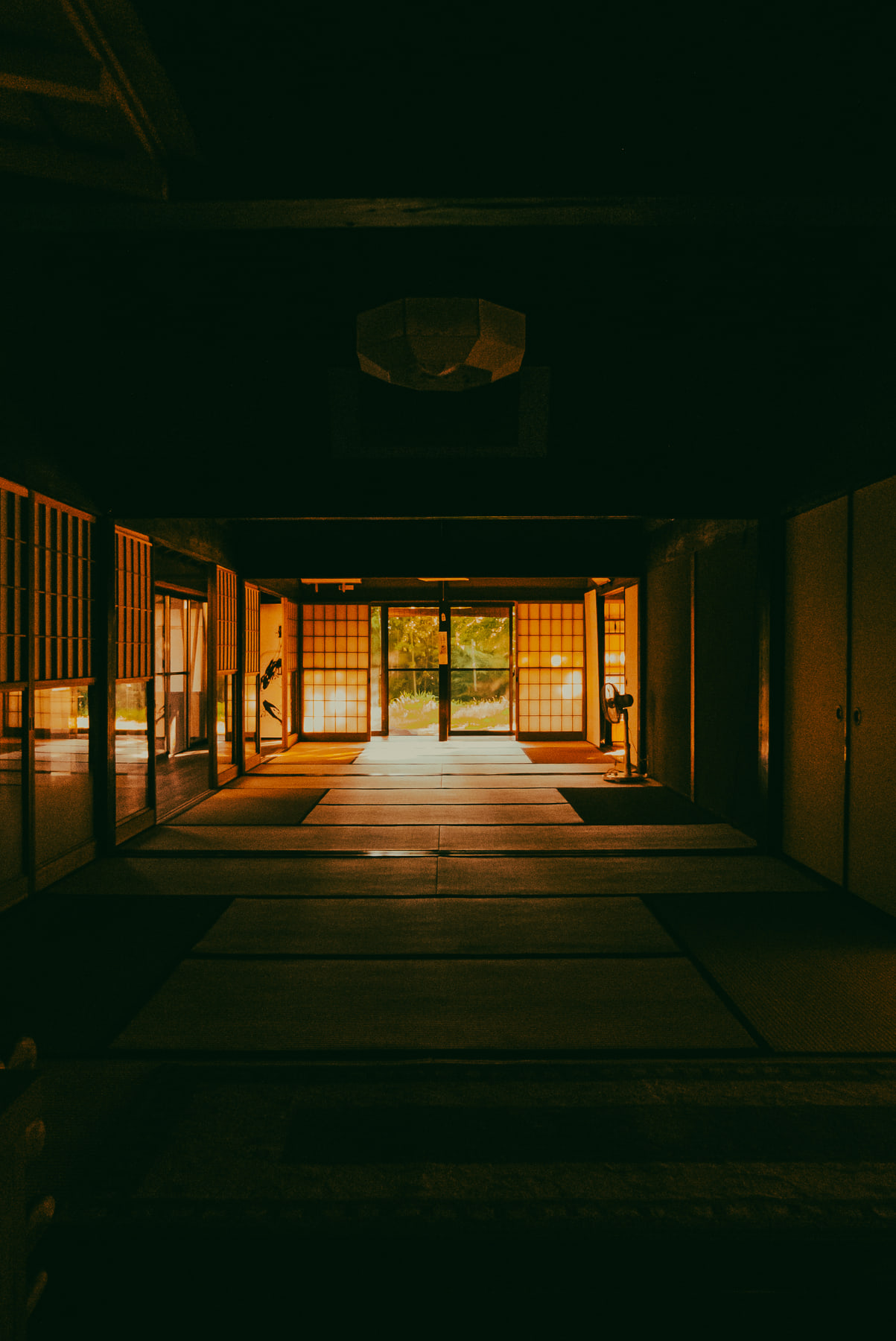
Renjun
Renjun is the mother of Shinku, my host at the temple. She used to work as a fashion designer. Today, she is a Buddhist nun. Her mornings begin around five, with chanting and prayer.
She cooked every day. Rice obviously, pickled vegetables, sometimes soba, sometimes sushi, once cabbage with minced meat, and a whole run of dishes whose names I still do not know.
I cannot get her food into words. It was close to perfect every day, and every day I failed to get over it.
We talked a lot, in English, which was easy enough. We went to an exercise class together, taught by a former Japanese baseball player. Baseball is enormous in Japan, and I was comfortably the least informed person in the room.
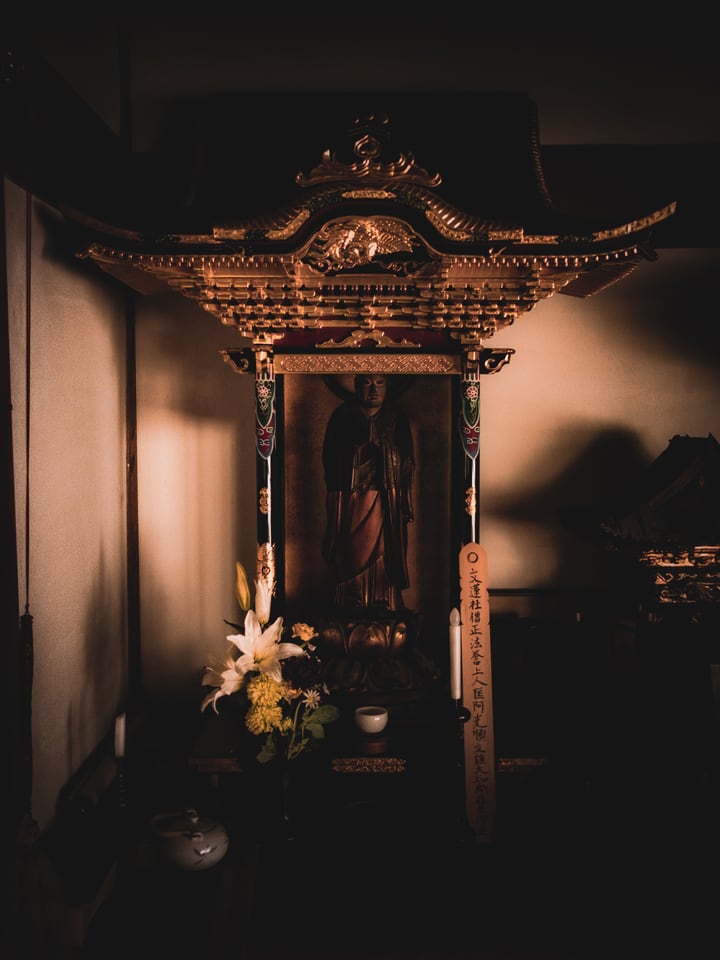
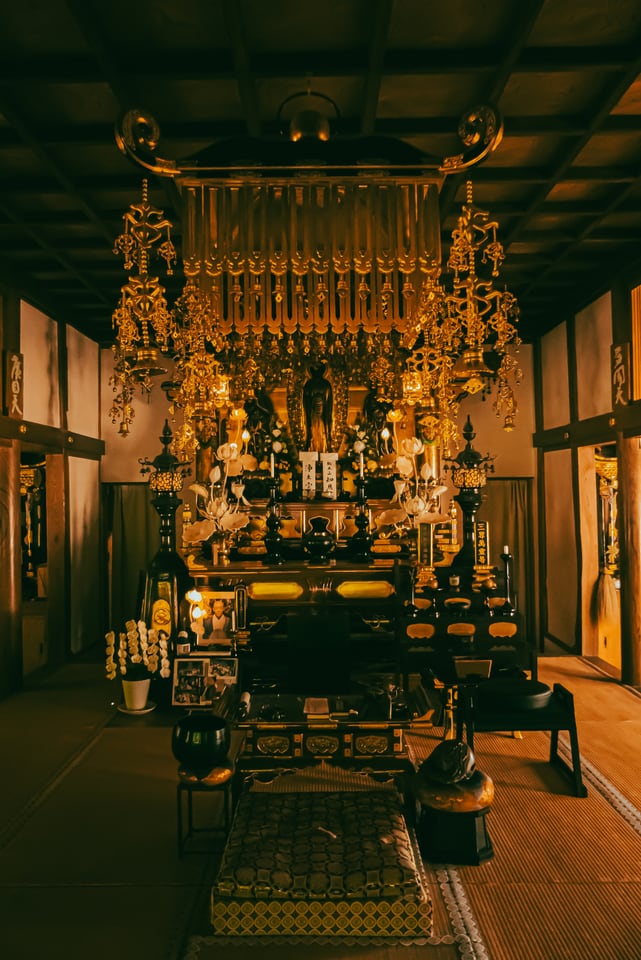
And every evening at six I had to strike the temple bell. With a hanging wooden beam that you pull back and let go. Six strikes, for six o’clock. The sound carried across the whole village.
The first time I was nervous, because I assumed there was a way to get it wrong. After a few days it was simply the thing that happens at six. That is what staying somewhere does. Nothing stops mattering. It just stops being an event.
It is still one of the things I hear immediately if somebody says Japan.
I have no proper photograph of Renjun. None of her, none of the two of us.
I have fifty pictures of landscapes I saw once. And not one of the person I miss most from Agui. That bothers me more than I expected it to.
Jonas, one of my oldest friends, came to visit me in Japan. He went on towards Osaka afterwards, and eventually I followed.
We had a very good day and a very good evening there. It does not need to be more than that.
After that I flew back to Thailand.
Either way, I am nowhere near finished with Japan. Next time I want to go further south. Shikoku is fairly high on the list.